

Environmental heterogeneity CAN mitigate exotic invasion impacts
Our research is playing an important role in addressing factors that mitigate and exacerbate ecological impacts of exotic invasion in the Upper St Lawrence River. Examples include the role of spatial environmental heterogeneity and wetland refuges, time since exotic invasion, dietary niche displacement, as well as how nutrient enrichment gradients in alter pathways in which resources and contaminants are channeled in food webs, with ultimate consequences for ecosystem services provided to humans, such as consumption advisories for fish.
Charette, C., M. Rautio, G. Cabana, F. Guillemette, and A.M. Derry. 2025. Cascading effects of biological invasion and eutrophication disrupt trophic energy pathway and food web quality. Freshwater Biology – Accepted
Charette, C. and A.M. Derry. 2024. Environmental heterogeneity moderates resource specialization and ecological impact of an aquatic invader. Freshwater Biology 69: 932-944. DOI
Morissette, O., C. Charette, M.J.S. Windle, A. Francis, A. Drouin, J. Goldsmit and A.M. Derry. 2024. Environmental determinants of round goby invasion refuges at a river scale: implications for conservation of native biodiversity. Canadian Journal of Fisheries and Aquatic Sciences 81(2): 190-201.DOI
Astorg, L., C. Charette, M. Windle, and A.M. Derry. 2022. Two decades since first invasion: Revisiting round goby impacts on nearshore aquatic communities in the Upper St. Lawrence River. Journal of Great Lakes Research. 48: 581-592. DOI
Astorg, L., Sanderson, S., Côté-Gravel, V., Sorbara, F., Windle, M.J.S., A.P. Hendry, and A.M. Derry. 2021. Different refuge types dampen exotic invasion and enhance diversity at the whole ecosystem scale in a heterogeneous river system. Biological Invasions 23: 443-460. DOI
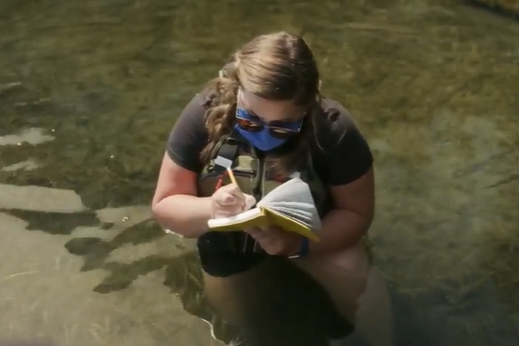
2021: Cristina Charette @ La semaine verte
Le gobie à tâches noires
